Meet Sally, a librarian living with rheumatoid arthritis
- 67 years old, diagnosed with RA 10 years ago
- Walks to her job every day
- Has suffered from painful RA flares and joint issues
- About a month ago, the flares started to worsen and her physician considered which DMARD to try next
- She was prescribed a glucocorticoid to help manage her flares
- After 4 weeks of taking a glucocorticoid, her erythrocyte sedimentation rate (ESR) and C-reactive protein (CRP) have decreased slightly, but she is still experiencing significant joint issues
- Sally needs an additional treatment option for her RA flares
Are you seeing patients like Sally in your practice? If so, consider Cortrophin Gel as the next step for their RA flares.
Are you seeing patients like Sally in your practice? If so, consider Cortrophin Gel as the next step for their RA flares.


Understanding flares in RA
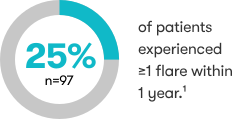
A 2018 study that examined flare frequency in 97 stable DMARD-treated patients with RA who were in remission* found that 25% of patients experienced ≥1 flare within 1 year.1
*Patients may experience RA flares, including those who were in clinical remission at baseline, which was defined as DAS28 <2.6 in a study examining flare frequency over 1 year.1 In patients who were in remission at baseline and treated with stable DMARDs for at least 6 months, 25% experienced at least 1 flare within 1 year.1
DAS28=Disease Activity Score in 28 joints; DMARD=disease-modifying antirheumatic drug.



 Contact a rep